

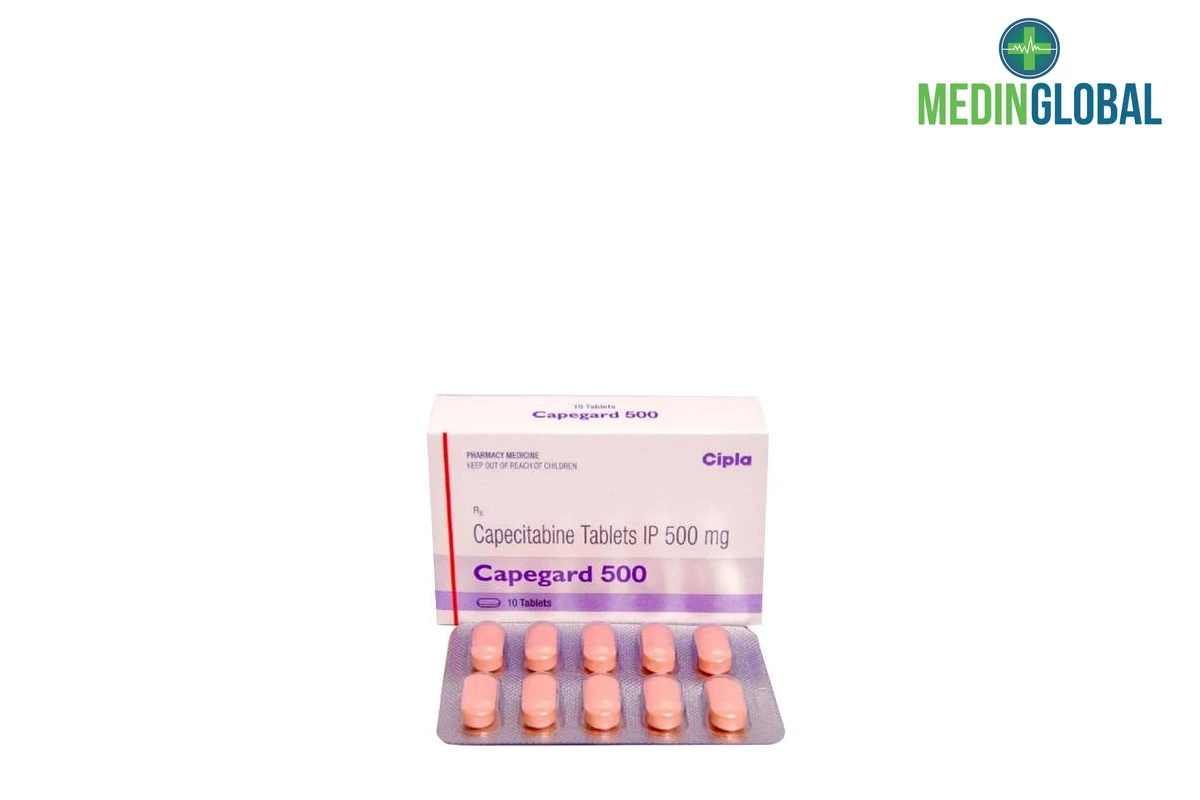
Capeguard 500 mg – Composition, Uses and Product Information
Product Overview
Capeguard 500 mg contains capecitabine, an oral anticancer medicine that is converted in the body into a form of fluorouracil. It interferes with cancer-cell DNA production and may be used in the treatment of selected colorectal and breast cancers, depending on the patient’s diagnosis and treatment plan.
Capecitabine is generally administered in defined treatment cycles under the supervision of an oncologist. Treatment requires careful assessment of kidney function, blood counts and potential adverse effects. Testing for DPD enzyme deficiency may also be relevant because severe toxicity can occur in susceptible patients.
Therapeutic Uses
Capeguard 500 mg is associated with the treatment of selected colorectal and breast cancers.
- Used in selected colorectal cancer treatment plans.
- Used in selected breast cancer treatment plans.
- Contains capecitabine, an oral anticancer medicine.
- Interferes with cancer-cell DNA production.
- Requires specialist assessment and monitoring.
How Does Capeguard 500 mg Work?
Capeguard 500 mg contains capecitabine, a fluoropyrimidine antimetabolite.
After oral administration, capecitabine undergoes conversion in the body into fluorouracil. This active substance interferes with the processes involved in DNA production, affecting the growth and multiplication of cancer cells.
Its use depends on the cancer type, treatment stage and the oncologist’s prescribed treatment plan.
Administration Information
Swallow Capeguard 500 mg tablets whole with water within 30 minutes after a meal, following the oncology treatment schedule prescribed by the treating specialist.
- Follow the prescribed treatment cycles carefully.
- Do not take additional tablets to replace missed doses without medical instructions.
- Attend recommended blood tests and monitoring appointments.
- Kidney function and blood counts should be assessed as directed.
- Follow the oncologist’s instructions throughout treatment.
Important Product Considerations
- DPD enzyme deficiency testing may be relevant before treatment.
- Kidney function should be assessed.
- Blood counts require appropriate monitoring.
- Treatment-related adverse effects should be discussed with the oncology team.
- Dosage and treatment cycles must be determined by the treating specialist.
Product Details and Packaging
Product requested: Capeguard 500 mg.
Composition: Capecitabine 500 mg.
The dosage form and pack size should be matched to the actual manufacturer-labelled presentation. Packaging, batch identification, expiry date and remaining shelf life should be confirmed by an authorized supplier before any transaction.
Medicine Enquiry Coordination Through Medinglobal
Medinglobal receives medicine-related enquiries and may help patients, caregivers and eligible healthcare organizations communicate with independent, appropriately authorized pharmaceutical suppliers or service providers.
Medinglobal does not itself manufacture, dispense, sell or export this medicine. Availability, prescription requirements, lawful supply routes, supporting documents and destination-country restrictions must be confirmed by the relevant authorized provider.
How to Submit an Enquiry
Submit your Capeguard 500 mg enquiry through the Medinglobal enquiry form.
Please provide:
- Required product name and strength.
- Required quantity.
- Destination country.
- Whether the enquiry is for an individual patient or healthcare institution.
- Valid prescription or supporting documentation, where required.
Medinglobal may refer the enquiry to an appropriately authorized independent partner for verification and response.
Frequently Asked Questions
Q1. What is Capeguard 500 mg used for?
Capeguard 500 mg is associated with the treatment of selected colorectal and breast cancers, depending on the patient’s diagnosis and treatment plan.
Q2. What does Capeguard 500 mg contain?
It contains Capecitabine 500 mg.
Q3. How does Capeguard 500 mg work?
Capecitabine is converted into fluorouracil in the body, where it interferes with cancer-cell DNA production.
Q4. Can Capeguard 500 mg be taken without medical advice?
No. Capecitabine requires an oncologist’s prescription, supervision and appropriate monitoring.
Q5. Can international patients enquire about Capeguard 500 mg through Medinglobal?
Yes. International enquiries can be submitted, subject to verification, authorized partner availability and applicable destination-country regulations.
Reviews
There are no reviews yet.